New Panels at Fromelles.

Three new information panels have recently been installed at the Australian Memorial Park at Fromelles. These will provide extra information to visitors and supplement the Ross Bastiaan bronze relief which shows the battlefield during the Battle of Fromelles in July 1916.

Secretary, of the Fromelles Museum – A.S.B.F., Association pour le Souvenir de la Bataille de Fromelles en 1916-, Carole Laignel has provided photos of the panels.

Thanks Carole, merci.

Posted in Memorials, Top Posts | Comments Off on New Panels at Fromelles.

AIF takes to the air.

In September 1912 Government approval was given for the establishment of an Australian military flying school. The Central Flying School was based at Point Cook in Victoria.

At the commencement of the Great War the Australian Flying Corps was formed as a corps of the Australian Imperial Force (AIF). At the commencement of the hostilities the AFC had two flying instructors and five aircraft.

The Australian War Memorial website gives an outline of the AFC’s activities during the war stating: The AFC’s four-line squadrons usually served separately under the orders of Britain’s Royal Flying Corps. The AFC’s first complete flying unit, No. 1 Squadron, left Australia for the Middle East in March 1916. By late 1917 three more squadrons, Nos 2, 3, and 4, had been formed to fight in France. A further four training squadrons based in England formed an Australian Training Wing to provide pilots for the Western Front. For more information click  here.

Australia’s Official History of Australia in the War 1914-1918, Volume III, The Australian Flying Corps in the Western and Eastern Theatres of War, 1914-1918 written by F.M. Cutlack, is available on line at the Australian War Memorial Website. Click here.

As part of the fund raising activities for the AFC a song was published by the AFC Comfort Fund with words ‘by some of the boys’ and music by H. Brewster-Jones.

Source: National Library of Australia

We are the boys of the Flying Corps,
Australia’s the land we defend,
Our Planes fly over land and sea,
And the war we’ll fight to the end.
We’ve got Planes and Pilots too,
Who chase the Taube through the blue,
And we’ll be there to keep in repair our fine British aeroplanes too.
Chorus:
Over land and over the sea bombing the Boche and making him flee,
Hey! Archibold shoot a little higher, you!
Fritz below have a banana?
Send up your Taubes to Tommy and me.
Come along. Coo-ee!
Planes that fly across the sky to defend our country and King,
Are built as true as can do in engine, chasis or wing.
But though they often win unharmed they sometimes tumble beneath the foe;
So We’ll be there to do our share, and patch and mend the blow.
Chorus

The musical score is available from the National Library of Australia. Click here.

Frank McNamara was the first Australian airman to be awarded the Victoria Cross. Lt. McNamara was a graduate from the Central Flying School. McNamara was awarded the VC for rescuing a fellow squadron member, Captain D. W. Rutherford who had been shot down during a raid over Gaza. To find out more about the exploits of Frank McNamara click here.

In March 1921, drawing on the experience of the First World War, the AFC went on to become a fully independent Air Force. Captain McNamara went on to pursue a career in the Royal Australian Air Force (RAAF), rising to the rank of Air Vice Marshal during the Second World War. Click here to read more.

***** 

British aircraft of the Royal Flying Corps, including the AFC, for most of the Great War carried the familiar red, white and blue roundel as their distinctive markings, however, this was not the original choice of marking.  Unfortunately, when the aircraft were at high altitude, the Union Flag insignia used as the early markings, appeared as a red cross and on one occasion French forces had mistaken it for the German cross.  Then, on 26 October 1914, an aircraft from No 4 Squadron RFC was on artillery reconnaissance near Gheluvelt, when at about 1,000 feet, it was fired on by British infantrymen and crashed in flames killing the pilot Lt. Hosking and the observer, Captain Crean.  This incident hastened the adoption of the red, white and blue roundel as the RFC insignia. 

Source:  Stand To!  The Journal of the Western Front Association, No 13, Spring 1985 CQMS Hopper’s Diary  

Posted in Australian Flying Corps, Diggers of First AIF | Comments Off on AIF takes to the air.

Loss of the AE1

A for Australian
E for submarine class
1 for first submarine of Royal Australian Navy Fleet

Photo: Australian Submarine AE1 [AWM H17537]
This photo has been reproduced with the permission of the Australian War Memorial

Ninety four years ago, on Monday 14th September 1914, the Royal Australian Navy lost its first vessel in World War 1. The AE1 vanished while on patrol with HMAS Parramatta, off the coast of New Britain. The AE1 and AE2 were the first submarines of the Royal Australian Navy and had only arrived in Sydney four months earlier, from England. When war was declared the submarines were deployed to take part in the successful capture of the German radio base at Rabual.

To read about the AE1 and its loss click here.

The commanding officer of the vessel, Lieutenant-Commander Thomas Besant RN, and 34 submariners lost their lives when the submarine disappeared. To read a complete list of the crew members who made the ultimate sacrifice click here.

It is believed that the AE1 hit a coral reef and sank in deep water. It is a mystery still to be solved. The latest unsuccessful search took place in May 2007. Click here to view a report from the ABC Lateline Program.

LEST WE FORGET

Posted in Diggers of First AIF, Gallipoli, Uncategorized | Comments Off on Loss of the AE1

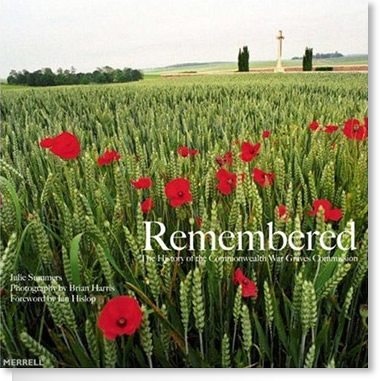
Remembered

Keep a look out for this book, which is now appearing as a clearance item in bookstores: 

Remembered: The History of the Commonwealth War Graves Commission

Remembered is described by the publishers as:
A celebration of the human story behind the extraordinary and diligent efforts of those who felt passionately that the fallen of the Great War should be remembered in perpetuity and with a dignity that had not hitherto been accorded to the ordinary soldier. So successful were the early commissioners in creating a lasting and fitting memorial, where men and women were buried side by side regardless of race, rank or creed that the same design was followed for the dead of the Second World War. Those who have no known grave are commemorated on the Commission’s memorials to the missing throughout the world and treated with equal respect.

Remembered was recently purchased, from a QBD Bookstore, for $20 reduced from rrp $89.95. QBD website lists their store locations. Click here to see if there is a store near you.

Posted in Books | Comments Off on Remembered

Elsewhere on the web

Worth a look:

The BBC website has a specialised History area which includes an extensive range of topics including Ancient History, British History, World Wars and Recent History. To visit the BBC History site click here.

Inside the BBC History World War One pages topics include:

  • Descent into War
  • Campaigns and Battles
  • The World at War
  • Human Experiences
  • The Trenches – Virtual Tours
  • Debates
  • Making Peace

To view this section of the site click here.

On the site there is also a section on Australia in World War One, click here to view.

Also worth a look is the British National Army Museum, which has is currently carrying an exhibition tracing the action on the Western Front during 1918, through to the Armistice. This includes a well balanced summary of the German Spring Offensive and how it was turned back in the Allied offensive commencing on 8 August and continuing for the final “hundred days”.  The account acknowledges General Rawlinson’s British Fourth Army, spearheaded by the Australian and the Canadian Corps, attack at Amiens and how the British had perfected how to combine infantry, artillery, tanks and aircraft in a co-coordinated attack. While Australians are generally familiar with the role of the Australian Corps commanded by Sir John Monash, this account places this in the perspective of the British Fourth Army, supported by the Third and First Armies.  Even in this context, the account notes that “the British Fourth Army also resumed its offensive, and the Australian Corps crossed the River Somme on 31 August, breaking the German lines at St Quentin and Péronne. General Rawlinson described the Australian advance as the greatest military achievement of the war.”  To view the site click here – worth bookmarking.

*****

Have you checked the Plugstreet Archaeological Site recently. They have added some impressive photos from their most recent find:
On 6th August 2008, No-Man’s-Land Archaeology, a multi-national archaeology group who specialise in the First World War, found the body of an Australian soldier of the Great War whilst excavating German trenches near St Yves in Wallonia, Belgium. The soldier was in full battle order with all his well-preserved equipment, medical kit, weaponry and parts of his uniform. His shoulder and collar titles identified him as an Australian. The area was attacked by the Australian 3rd Division on the morning of 7th June 1917 as part of the Battle of Messines, a prelude to the better known battle of 3rd Ypres (Passchendaele). Unlike recent discoveries at Fromelles, this was a battlefield casualty in full kit buried where he fell rather than a burial in a grave behind the lines.

To view the most recent photos, click here.

Posted in Tips | Comments Off on Elsewhere on the web

AGM & the Armistice

Members of the Families and Friends of the First AIF are invited to visit the Member’s Area  and read the ‘Updates’ for the latest information on the upcoming Annual General Meeting.  This year the AGM is being held in Canberra on 10th November to co-incide with the commemoration of the 90th Anniversary of the Armistice.  FFFAIF Members will have access to AWM reserved seating for the 90th Remembrance Day Service at 11am on the 11th. 

The Members Area also includes information on how to order your bound copies of past editions of our great magazine, DIGGER, Volumes I, II and III.  Many fascinating stories and photographs have been published in the 24 editions since 2002 that provide an interesting and valuable library addition for those with an interest in the Australian perspective of The Great War.

If you are interested in becoming a member of the Families and Friends of the First AIF, annual membership is inexpensive and includes quarterly copies of DIGGER delivered to your door. Membership is $A40 p.a. For more details visit our Join Us page

Posted in DIGGER Magazine | Comments Off on AGM & the Armistice

MP on Duty

Gain an insight into the work of the Australian Provost Corps during the Great War by visiting our newest web page, Military Police Post. Within these pages you will find Reports from Assistant Provost Marshall (APM) 1st ANZAC CORPS which have been compiled by Families and Friends of the First AIF member, Trevor Munro, from the APM War Diaries held at the Australian War Memorial.

Trevor is also the author of Wellington’s Finest: a study of the contribution of all the men and women that enlisted from the Wellington district of central west New South Wales during the Great War of 1914 – 1918.

Wellington’s Finest was edited by FFFAIF Vice President, Graeme Hosken, author of digging for Diggers: A guide to researching an Australian soldier of the Great War 1914-1918 [Anzac Day Commemoration Committee, Queensland, 2002]. An extract from Graeme’s Preface notes:
Whilst ‘Wellington’s Finest’ may appear, at first glance, to be of interest only to those living in the Wellington district, we believe the book will attract a wider readership. Military historians will be delighted to find many first-hand accounts from Diggers included, in which they tell of their experiences in camps, on troopships, in hospitals and in the battlefields of Gallipoli, the Middle East and the Western Front. We have also been fortunate to uncover collections of photographs taken by the Diggers that have never before been made available to the public. These primary sources are a highlight of the book and will enable persons from all parts of Australia to gain an idea of the experiences of those who served in the Great War. As a study in local history, ‘Wellington’s Finest’ provides a model for others who wish to research the names on their memorials and honour rolls.

If you are interested in obtaining a copy of Wellington’s Finest send an email to projectfffaif@yahoo.com.au.

Posted in Books, Diggers of First AIF | Comments Off on MP on Duty

AN & MEF Casualties

The first Australian casualties of the Great War were members of the Australian Naval and Military Expeditionary Force (A.N & M.E.F.). They were Able Seaman W G V Williams, a member of the 1st Battalion A.N & M.E.F and Captain B Pockley, a medical officer with the Australian Army Medical Corps.

Photo: Australian Naval & Military Expeditionary Force Memorial
Bitapaka War Cemetery [Greg Knight]

The A.N & M.E.F. was formed after a request to Australia from the British Government on 6th August to occupy the German colonies in the South Pacific and secure the German wireless stations to prevent transmission to the German Pacific naval squadron.

The A.N & M.E.F, under the command of Colonel William Holmes, departed Sydney aboard the P & O Liner Berrima. The force consisted of one battalion of infantry, which included militia men from the Scottish Rifles, plus 500 naval reservists and ex-sailors who served as infantry. The Berrima proceeded to Palm Island, off the coast from Townsville to rendezvous with the New Zealand force, escorted by the cruisers HMAS Australia and HMAS Melbourne.  

The A.N & M.E.F, then sailed on to capture Rabual. Able Seaman Williams and Captain Pockley died on the 11th September 1914 from wounds sustained during this action and died aboard HMAT Berrima.

Within three months Colonel Holmes’s forces had garrisoned the remainder of Germany’s Pacific possessions south of the Equator, stretching from northeast mainland New Guinea to the Admiralty Islands, New Ireland, Bougainville, and Nauru.

Details of the campaign are contained in The Official History of Australia in the War1914-1918 – Volume X: The Australians at Rabaul. The Capture and Administration of the German Possessions in the Southern Pacific.  All volumes of The Official History are available on line at the Australian War Memorial website. Click here to read Volume X.

If you are interested in researching someone who served in the A.N & M.E.F the Australian War Memorial website also contains the Embarkation Rolls of the A.N & M.E.F and Service Records of personnel can be accessed through the National Archives of Australia.

*****

FFFAIF Member Greg Knight in his DIGGER article, The WW1 Australian Grave in the Old German Cemetery, Madang – Papua New Guinea, recalls his findings during a visit to Papua New Guinea:
Whilst walking through the Old German Cemetery in Madang (known as Friedrich Wilhemshafen in 1914) in Papua New Guinea in August 2003, my wife Margaret and I came across the lone grave of a WW1 Digger, dated 24 January 1915.
These days Madang and its beautiful coastline and islands, is a Mecca for international divers and the welcome destination for the budding Shaggy Ridge Trek. Back in 1914 it was the mainland centre for the German Lutheran Church and its missionaries, the German New Guinea Company and a haven for malaria and other then untreatable tropical diseases. Many of the Germans died from Malaria and an ornate cemetery developed on the outskirts of the small town.
Today, due to Madang’s post WWII growth, the cemetery lies next to the exotic Madang Markets and only a short walk from the centre of the Provincial Township, sandwiched in between Kudam, Badaten and Nanulon Streets. As the ground is coral and the water table is very high, the cemetery was artificially elevated, which meant the ground was unstable and subject to years of erosion. Also, due to allied bombing during WW2, many of the graves and headstones have been upset and upturned. Today the area is used as a local meeting area and subject to graffiti and other acts of vandalism.
All the other identifiable graves in this cemetery are German except the one of Private Frederick Golden Howes, Service Number 148 – 3 Bn, Australian Naval & Military Expeditionary Force. A brass Commonwealth War Graves plaque is bolted to the cement plinth. This lone Australian grave had me puzzled – why was it there?
On our return to Sydney I began to unearth the story…………………………….

If you would like to read the conclusion to Greg’s story past copies of DIGGER are available to members of the Families and Friends of the First AIF. Annual membership is inexpensive and includes quarterly copies of DIGGER delivered to your door. Membership is $A40 p.a. For more details visit our Join Us page

Each edition of DIGGER contains many articles and photos, the majority of which are published for the first time and are provided by members. Details of the contents of past DIGGER magazines can be viewed by clicking here.
Copyright © DIGGER Magazine. All material in DIGGER is copyright. Subject to the fair dealing provisions of the Copyright Act 1968, reproduction in any form is not permitted without written permission of the Editor or Author/s.

*****

Another interesting snippet: …

Elena Govor, in her book Russian Anzacs in Australian History, writes that the cook aboard the HMAT Berrima was Julian Szablowsky.  Julian was one of several Russians who served in the A.N & M.E.F. Szablowsky had worked as a ship’s cook on Australian ships before the war, and was the first Russian to enlist and serve outside Australia.

Posted in A.N. & M.E.F., Diggers of First AIF | Comments Off on AN & MEF Casualties

Mont St.Quentin

Battle of Mont St Quentin

Photo: Men of the 24th Battalion, Mont St.Quentin
Source: Australian War Memorial [AWM E03138]

The Battle of Mont St.Quentin was fought in the closing stages of the Great War. The Battle was the focus of FFFAIF member Ross St.Claire’s talk at the 2008 John Laffin Memorial Lecture.
The following summary of Ross’ talk gives a glimpse into the significance of the Battle to the outcome of the War and its significance to the AIF.

Mont St.Quentin offers some startling contrasts to Fromelles. One was one of our greatest national tragedies, the other the greatest victory of the AIF. At Fromelles the battalions involved were at full strength, mostly composed of young, inexperienced, naive but eager soldiers. At Mont St.Quentin the battalions were at half strength or less. The men were still young. There were still a few new recruits, but most were battle-hardened and sick of war. They still realised they had a job to do – and did it bloody well, but they just wanted to get back home.
Battle experience and a more autonomous AIF, and improvements in, and evolution of tactics, weapons systems, training, leadership and communication are some of the elements that differentiate Fromelles in July 1916 to Mont St.Quentin in September 1918. Another main difference though is that at Fromelles the Corps leader was Haking, while at Mont St.Quentin it was Monash.
Both battles have in common the enormous casualties, bravery, sacrifice and determination of the young Australian men involved.
In August 1926 former Australian Corps Chief of Staff, General Sir Cyril Brudenell White, wrote to another famous Australian general, Sir Harry Chauvel. In his letter White rated his top four achievements of the AIF during the Allied offensives of August to October 1918. He listed the capture of Mont St.Quentin and Peronne in late August and early September as one and two respectively. [1] The Australian Corps at the time was part of the British Expeditionary Force’s (BEF) Fourth Army. It’s commander was General Lord Henry Rawlinson. He went so far as to state that the Australian victories were “the finest single feat of the war” [2] The Australian Official Historian, Charles Bean, wrote “The capture of Mont St.Quentin and Peronne is held by many Australian soldiers to be the most brilliant achievement of the A.I.F.” [3]
Such high praise puts Mont St.Quentin and Peronne before Lone Pine, Pozieres, Menin Road, Polygon Wood, Messines, Villers-Bretonneux, Hamel and Amiens.
The Australian Corps was commanded by the famous General Sir John Monash. Bean wrote that:within the Australian experience on the Western Front it was the only important fight in which quick, free manoeuvre played a decisive part. It furnishes a complete answer to the comment that Monash was merely a composer of set pieces. But Monash himself realised that it was also largely a soldier’s battle.[4] 

BRIEF OVERVIEW OF BATTLE
If Peronne and Mont St.Quentin was our most successful battle, then it is also one the least known. 
As I previously mentioned I will only give a brief overview of the battle, but concentrate more on some factors that resulted in such an enormous victory.
The success of the Australians, Canadians and British beginning on 8 August 1918 was stunning. Sound tactics, utilising the latest technology, thorough planning and a large build up of artillery and tank fire power contributed to the “Black Day” of the German Army. But the Germans were a very hard and resilient enemy.
They were gradually driven back throughout August. Haig decided that the 4th Army need not pressure the German retreat as hard as his other northern armies.
Monash was not happy with the concept and decided to keep pushing the enemy back to the Somme River by constant and aggressive patrolling. On 26 August the 2nd and 1st Divisions relieved the 1st Division south of the Somme and Monash ordered them to keep up continual pressure without incurring heavy loss. Meanwhile north of the Somme the unrelieved 3rd Division received the same instruction.
The weather at this time was warm and cloudy with daily showers.
By 29 August the 2nd Division had seized the west bank of the Somme opposite the fortified town of Peronne. On the same day the 3rd Division seized the town of Clery.
These successes gave Monash the chance to formulate his plan where he would surprise the Germans by moving his forces to the north side of the Somme, take the dominant natural feature of Mt St.Quentin and then the moated and ramparted town of Peronne. Obviously his plan was dependant on gaining a crossing of the river. At the same time the 15th Brigade under Pompey Elliot would try and cross the Somme south of Peronne.
With the tireless 3rd Division acting as a covering force the 5th Brigade crossed the river in the evening of 30 August on bridges repaired and built by Australian engineers under heavy fire. At dawn the next day the 5th Brigade attacked Mont St.Quentin. The speed and ferocity of the attack by the depleted 17th and 20th Battalions caught the Germans completely by surprise. Only Bean could describe the events before the battle from a soldiers’ eye: The task ahead was in some ways the most formidable ever faced by Australian infantry. Mont St. Quentin was already a familiar sight … All knew the Mount to be a famous fortress of the Western Front, and … few officers or men in the tired companies of the 20th, averaging only 60 rifles, and those of the 17th, averaging 70, believed they had any chance of success. They had no hot meal that night but … at 3 am an issue of rum arrived. On this occasion the old AIF practice, to keep rum till after the action, was broken in view of the weariness of the men. Never was an issue more welcome.
Charging and yelling at the top of their voices to give the impression of larger numbers the Australians rather easily reached the top of Mont St.Quentin.
To exploit the success Monash decided to bring the 6th and 7th Brigades across the Somme. The 14th Brigade of the 5th Division was also to cross the river and move through Clery to protect the right flank of the 2nd Division. Bean wrote that “The flanks must help the centre all costs … Casualties no longer matter”.
The hold of the 5th Brigade on Mont St.Quentin was soon lost to German counter attacks. Monash now decided that the 6th Brigade would retake it on the morning of 1 September while the 14th Brigade would thrust south east and capture Peronne.
The 6th Brigade retook Mont St.Quentin after more hand to hand fighting. The 14th Brigade took and held most of Peronne, advancing over 1000 yards through two barbed wire entrenched trench lines, with no tank and little artillery support against a determined enemy.
Both attacks were successful but later advances during the day were fractured by tiredness and breakdowns in communication, something Bean rather unfairly attributed to lack of drive in leadership. Definitely the heavy casualties inflicted upon the 14th Brigade late on 1 September were due in a large part to the free-flowing and ever changing nature of the battle – a new and unique experience for all leaders from generals down to platoon commanders.

VICTORIA CROSS
If awards are any indication of success then the fact that nine Australians won VCs at Peronne and Mont St.Quentin speaks for itself – Eight in three days, six in one day – 1st September 1918. My inclusion of GORDON 41st Battalion  may raise eyebrows, but the 3rd Divisions relentless advances north of the Somme laid the platform for Monash’s masterpiece. 

            L/Cpl Bernard GORDON 41st Bn 26-27/8/18

            Pte George CARTWRIGHT 33rd Bn 31/8/18

            Pte William CURREY 53rd Bn 1/9/18

            Sgt Albert LOWERSON 21st Bn 1/9/18

            Pte Robert MACTIER 23rd Bn 1/9/18

            Lt Edgar TOWNER 2nd MG Bn 1/9/18

            Cpl Alexander BUCKLEY 54th Bn 1/9/18

            Cpl Arthur HALL 54th Bn 1-2/9/18

            Cpl Lawrence WEATHERS 43rd Bn 2/9/18 

This is two more than Lone Pine although Lone Pine involved four brigades at full strength. The infantry at Mont St.Quentin was from nine brigades although their battalions were well below full strength – probably half.

DIFFERENCES BETWEEN AUGUST AND SEPTEMBER 1918
Three weeks had a remarkable influence on the AIF and its battles. Compared to 8th August those battalions attacking late in August and early September were at a distinct disadvantage.
No Tanks
Only field artillery could keep up with advance
Except for field artillery no covering barrages
Battalions even more below strength – August battles had cost AIF 6000 casualties between 7 and 14 August, which included 339 officers. Of this total the divisions later to be involved at Mont St.Quentin [2nd, 3rd, 5th] had lost 3276. At Mont St.Quentin these three divisions lost a further 3097. Between 24 and 30 August, in the advance to the Somme the 3rd Division had lost another 1200 casualties. 

REASONS FOR SUCCESS
The remarkable successes of Mont St.Quentin are attributable to a number of reasons. Paramount is the fact that the Australian Corps was at its efficiency peak. Compared to other armies and corps at the time it was without doubt one of the best on the Western front. The formation of a single self-contained and almost self-governing Australian corps had many advantages – increased confidence, uniting all Australian Divisions under a single command.
All volunteers.
Drastic shortage of recruits had an unusual effect in that most men were experienced, battle hardened and well trained – all had agreed to there.
Their endurance was astounding:
38th Bn had been without sleep for 89 hours before Clery fell;
On 30 August 2 battalions of 3rd Div were ordered to take a spur north of Clery. They were only 200 rifles strong each and were to attack by night objectives a mile away over uneven country seamed by old trenches and completely unreconnoitred;
On 31 August the 33rd Bn attacked Bouchavesnes Spur only 140 strong.    

CONCLUSION
Monash, by necessity, pushed his already exhausted troops relentlessly. The Australian infantry battalions were much depleted, some attacking Mont St.Quentin and Peronne at less than half strength. The victories of early August 1918 had come at a cost and recruitment in Australia for a long time not been able to keep up with the horrendous Western Front ‘wastage’. The tanks and artillery which supported the 8th August advances were not available three weeks later. Most of the tanks had been destroyed or damaged, and only the field artillery could, with difficulty, keep up with the unprecedented battle of spontaneous movement and speed. 
Later Monash pondered over the reasons behind such a monumental victory. He concluded: it was due firstly and chiefly to the wonderful gallantry of the men who participated, secondly to the rapidity with which our plans were put into action, and thirdly the sheer daring of the attempt. [5]
Monash appreciated the force he commanded. He knew the limitations, the potential and the expectations of the Australian Corps. He knew when to drive them hard, but also when to give them rest. He was also lucky enough to have some exceptional divisional and brigade commanders under him – Hobbs, Rosenthal, Elliot, etc
By 1918 the Australian Corps, despite depleting numbers, was ripe with many battle hardened men and NCO’s. More importantly, after over three years of war, most of its field and staff officers were as experienced and professional as any on the Western Front, despite being civilians in 1914.


[1] Pederson, PA. Monash as Military Commander. Melbourne University Press. [pb] 1992. P. 270

[2] Monash, Lieutenant-General Sir John Monash. The Australian Victories in France in 1918. Lothian Book Publishing Co., Melbourne [pb] 2nd ed. 1923 p. 207

[3] Bean, CEW. The Official History of Australia in the War of 1914-1918. Volume VI. The Australian Imperial Force in France. During the Allied Offensive, 1918. University of Queensland Press/AWM, St.Lucia, 1983 [copy of 1943 ed]. P. 873. Further references to Bean’s volumes are abbreviated to Bean III, Bean VI, etc

[4] Bean VI p. 873

[5] Monash. Australian Victories. P. 191

Posted in Commemorations, Events, John Laffin Memorial Lecture, Mont St Quentin, The Western Front | Comments Off on Mont St.Quentin

2nd Division Memorial

Photo: 2nd Divisional Memorial at Mont St.Quentin [Ray Hudson]

The 2nd Division Memorial stands beside the road known as the Avenue des Australiens just two kilometres from the Somme River. It is the only Australian Divisional Memorial which has changed since it was erected. The memorial originally featured atop its large marble plinth a Digger symbolically bayoneting a German eagle.

John Laffin, in his book, Guide to Australian Battlefields of the Western Front 1916-1918 describes how the change came about: ‘Germans who occupied France during the Second World War were affronted by the Digger and his dying eagle and removed them. They have not been seen since. However, the Germans did not damage the plinth or the bronze plaques and in 1971 a new and splendid memorial was erected.’

The web-site Australians on the Western Front 1914-1918 elaborates on the Battle of Mont St.Quentin and the 2nd Division Memorial.

To read and see more on the unveiling of the 2nd Division Memorial, on 30th August 1925, click here.

To gain an insight in to the importance of Mont St.Quentin – The key to the whole enemy position – click here.

To meet some of the men who paid the supreme sacrifice at the Battle of Mont St.Quentin –A man every inch of him – click here.

*****

The Campbelltown Macarthur Advertiser carries the story of a visit to the Western Front battlefields and Mont St.Quentin by a Sydney school principal. To read the report in the local Fairfax newspaper entitled Badge of honour comes home with a pilgrim click here.

Posted in Diggers of First AIF, Memorials | Comments Off on 2nd Division Memorial