Quiet At Fromelles

The Glasgow University Archaeological Research Division (GUARD) have returned the excavation site at Pheasant Wood Fromelles to its ‘original’ condition. The site of the 3 week dig now resembles a freshly ploughed field. 

Pheasant Wood - 8 days after completion of dig

Pheasant Wood-8 days after the dig finished

Photos: Pheasant Wood – a week after the completion of the archaeological dig.

Carole Laignel , Secretary of the F.W.T.M 14-18 (Fromelles Museum) who took the photos said that the field was now sewn with grass seeds – ‘so strange one week later….so different to what it was: so busy during the 3 weeks!’

Back in Australia author of the book entitled FROMELLES Patrick Lindsay is continuing his campaign to keep the story of Fromelles in the public arena with a talk given at the Wollongong on the NSW south coast last night.

The Illawarra Mercury spoke to Patrick about his impressions on the archaeological site in an article entitled Burial call for Diggers. Click here or read on…… 

Burial call for Diggers

by Michelle Hoctor

An Illawarra war historian is adamant that more than 400 soldiers buried in pits in northern France should be exhumed and given separate burials.

Patrick Lindsay, who has just returned from visiting a three-week archaeological dig in France where the mass graves have been uncovered, said it was apparent the Australian and British soldiers were not “resting in peace”.

A total of 1917 Australians died in World War I’s Battle of Fromelles on July 19, 1916.

At least 19 of the dead were from the Illawarra, with 14 still unaccounted for.

Ninety-two years later, relatives are hoping these men are among the 170 Australians and 300 British thought to be buried in pits dug by the Germans after the battle.

Mr Lindsay, whose book Fromelles traces the battle and efforts by family members to prove their relatives were buried at Pheasant Wood, Fromelles, described the dig as “emotional”.

“To see the graves was emotional,” Coledale-based Mr Lindsay said. “They were pretty respectful and careful about who they allowed to see the remains – very reverent with their treatment of it all.”

He said the prevailing mood was of sadness that so many men had been tossed together into the pits.

It confirmed in his mind the need to provide them with separate graves.

“Everyone who saw them told me they were not resting in peace,” he said. “They’re jumbled in there.

“They deserve individual burials. If these remains were found after the war they would have been buried individually.”

Mr Lindsay said a report was being prepared for defence ministers of the Australian, British and French governments who would decide on the next step.

Mr Lindsay will speak on his Fromelles journey tonight at a function organised by the Friends of Wollongong Library.

The talk will be held on Level 9 of the Wollongong City Council administration building from 5.30pm.

 FROMELLES IS NOT HONOURED ON THE NATIONAL OR ANY STATE MEMORIAL IN AUSTRALIA.

FFFAIF SUPPORTS ALL EFFORTS TO RECOGNISE FROMELLES ON OR AT THE NATIONAL AND ALL STATE MEMORIALS THAT PRESENTLY LIST BATTLES BY NAME.

Call back later to see if there is MORE NEWS

Posted in Top Posts | Comments Off on Quiet At Fromelles

Dignified Burial?

Lambis Englezos is back in Melbourne after having his research confirmed by the discovery of the bodies of the missing Diggers from the Battle of Fromelles. Lambis spent the past three months in the Fromelles area and was present each day of the 3 week archaeological dig at Pheasant Wood.

Lambis Englezos, Tim Whitford & Ward Selby

Photo: Lambis Englezos, Tim Whitford & Ward Selby at Pheasant Wood.  


The Herald Sun in Melbourne published this report today, 20 June, from an interview with Lambis Englezos on his return.

Dignity plea for buried Diggers in France by Michael Warner

THE Melbourne schoolteacher behind the discovery of a mass war grave in France has pleaded for the soldiers to be given a dignified reburial.

Lambis Englezos, who has returned to Melbourne after witnessing this month’s emotional dig at Pheasant Wood, believes the remains of all 173 Diggers and 300 British can be properly identified.

The dead were buried by German troops after the disastrous WWI Battle of Fromelles on July 19, 1916.

“From what I have seen, each of the bodies is recoverable. The tight clay has kept them in place and the bones are articulated.

“Physically, they can be removed body by body,” Mr Englezos said.

“We’ve got to make every effort to recover our war dead . . . you can’t leave them there like that.

“What I am after is the dignity of a reburial, either as a known or an unknown,” he said. “They are not at rest.”

Work stopped on the Fromelles site last Friday as Australian, French and British authorities determine what to do next.

Opinion is divided over whether the bodies should stay in the ground, with a memorial built over them to honour their sacrifice, or whether they should be exhumed and reburied at a nearby Commonwealth war grave.

Mr Englezos, an amateur historian who found the grave site last year after a six-year search, said DNA testing and reburial could begin as early as April next year.

“You can’t do it through the winter — even in March, it’s still very wet at the site. So it might be April or even May next year before they can do a recovery — if, indeed, that is what they do,” Mr Englezos said.

An estimated 5533 Australian soldiers were killed, wounded or disappeared in just over 24 hours during the Battle of Fromelles — the deadliest single day in Australia’s history 

The same newspaper is provoking discussion by its Editorial; Let them rest – in the same edition as Lambis’ interview. Following is a transcript of the editorial from The Herald Sun today, 20 June 2008.

Let them rest Editorial

THE remains of 170 Australian troops discovered in burial pits near Fromelles in northern France should not be disturbed.

We agree with the RSL that the site of one of Australia’s bloodiest battles during World War I should be designated a war grave.
Some 1719 Australian troops were confirmed killed and many others went missing on the night of July 19, 1916. Casualties totaled 5533.
A fitting monument to their sacrifice should be built on the site and made a significant part of our next Anzac Day.

The Herald Sun invites comments from anyone reading these two articles.  Click here to comment – then scroll to the bottom of their Editorial page.

Comments are also sort on the Lambis Englezos article. Click here to comment – then scroll to the bottom of their page.

FROMELLES IS NOT HONOURED ON THE NATIONAL OR ANY STATE MEMORIAL IN AUSTRALIA.

FFFAIF SUPPORTS ALL EFFORTS TO RECOGNISE FROMELLES ON OR AT THE NATIONAL AND ALL STATE MEMORIALS THAT PRESENTLY LIST BATTLES BY NAME.

Call back tomorrow to see if there is MORE NEWS

Posted in Top Posts | Comments Off on Dignified Burial?

Recovery & Reburial

The completion of the archaeological dig at Fromelles has precipitated widespread discussion on the fate of the soldiers whose remains were buried by the German army nearly 92 years ago. While the governments of Australia, Britain and France await the official report from the Glasgow University Archaeological Division (GUARD), public debate on future options has begun.

Memorial Plaque Pheasant Wood 13 June 2008

The Herald Sun on 16 June reported that the National President of the RSL Major-General Bill Crews stated: the RSL’s view is that, having confirmed the presence of a mass grave containing Australians, the site should not be further disturbed and should now be designated a war grave.

Others directly involved in locating the burial site of the missing Australian Diggers and British soldiers of the Battle of Fromelles have a different opinion. The following article by Chris Bryett Families and Friends of the First AIF member and founder and president of Recovering Overseas Australian Missing Inc. (ROAM Inc) presents a different point of view. 

Recovery And Reburial Of Our Diggers

The finding of the missing Diggers of Fromelles reminds us all of their supreme sacrifice and our duty toward them.

Since they paid the ultimate price it’s inappropriate to weigh up what might be done in today’s dollars and cents.

Luckily, procedure dealing with this outcome has already been provided for in the Army Instruction 54-4 “Missing in Action Presumed Killed: Recovery of Human Remains of Defence Force Members”

The aim of this Army Instruction is to state Australian Defence Force policy on the recovery and burial of human remains and to provide guidelines for authorities receiving information on the location of possible human remains of ADF members.

The Australian Government, acting in conjunction with other British Commonwealth Nations, instituted a policy which prohibited the repatriation of the remains of WWI Commonwealth military members to their homeland. It was further agreed by the Commonwealth Nations that military personnel killed in war would be buried in the nearest War Graves Commission Cemetery to the place of death. Following World War II, the Commonwealth Nations, including the Australian Government, reaffirmed the policy which remains extant.

The Instruction requires that service authorities are to liaise with the Surgeon General ADF for the provision of medical/dental records and for the provision of forensic experts to examine the remains.

It is the responsibility of the Office of Australian War Graves acting in conjunction with the Commonwealth War Graves Commission to:

a. assign a burial plot for the remains in the appropriate Commonwealth War Graves Commission cemetery,

b. erect a suitable headstone at the grave site, and

c. maintain the grave in perpetuity.

The instruction requires that where remains are identified as belonging to an ADF member (keeping in mind the unique circumstances of Pheasant Wood where the names of the dead are known), funeral arrangements are to be in accordance with normal military procedures.

This is not part of the Instruction, but the standard technique to determine where people were born, and their subsequent mobility – including whether or not they moved to Australia, is to analyse their tooth enamel for stable isotopes of strontium. This can be done for a low cost of around $200 – $250 per person. By this technique Diggers can be found and respectfully treated in accordance with the Instruction. The Brits can determine what should be done for their Tommies.

DNA can then be obtained to identify them either against the known relatives, or perhaps those found in the future, therefore each Digger should be separately buried.

The instruction provides that in the event that remains are identified with an ADF member and Next Of Kin can be contacted, Service authorities are to notify the NOK of the circumstances surrounding the finding of the remains and the funeral arrangements being undertaken. The Approving Authority for the investigation may authorise at public expense the travel of the NOK to attend the funeral. Where the NOK is aged or infirm, approval may be given for travel at public expense of an accompanying escort, usually a family member. Where travel overseas is involved, economy class air is authorised and accommodation costs are limited to three nights accommodation. Cost of meals, passports, inoculations and other incidental expenses remain the responsibility of the NOK.

Minister Snowdon was reported on 28 May as saying to AAP:

“everything possible would now be done to identify the remains found near Fromelles, including DNA testing.”

“If it’s possible to do the DNA tests we’ll then seek to contact family members,” he said.

“We’re already inviting family members to register (with defence).”

We can all remember that when the 5 Diggers were found in Zonnebeke that DNA testing was used for the first time on our recovered WWI Diggers. Two were identified by using DNA provided by NOK and work continues to identify the other 3 who were all given separate graves at the closest open CWGC cemetery. What we do for 5 we must do for 170 or is there some cut off number when it gets too expensive or too hard? What fight will we put up for these Diggers to be appropriately identified and remembered?

Pheasant Wood is a unique situation. There we actually know the names of the sons, husbands or fathers who fought and died. As Tim Whitford and Lambis Englezos said the ‘boys’ are not at peace. According to the Instruction they should be moved to the closest open CWGC cemetery and given their military funeral with an individual headstone just as their mates at Zonnebeke were. That provides them with a wonderful opportunity for DNA testing. Moving them to an extension at VC Corner, Ration Farm (where the balance of the Diggers are likely to be) or the new Pheasant Wood Cemetery would be good outcomes.

Army should follow the ADF instruction and give these deserving Diggers their rightful and ceremonial burial or as Patrick Lindsay put it…their final salute.

This appeared on the BBC on Friday 13 June 2008:

“On Friday the investigation team stood silently, with representatives from the British and Australian army, as a bugler sounded the Last Post.

This phase of the operation is now complete. The graves will be sealed once more to await a decision on how and where the soldiers should be commemorated.

Many are now calling for the exhumation and individual reburial of every man – a costly exercise that would probably be undertaken by the Commonwealth War Graves Commission.

Britain’s Veterans’ Minister Derek Twigg told the BBC that governments would help meet the cost. But that decision would not be made until the excavation team had handed over their full report.

Relatives on both sides of the world will have to wait a while longer before they can close this chapter of their family history. “

The video coverage at the BBC website talks of Australian and British soldiers being buried 3 times. Once by the Germans, a second time by the investigation team and hopefully a third time to their final resting place.

Let’s hope third time lucky!

The question is, are we going to lead or be lead in this final Battle of Fromelles?

June 15, 2008  Chris Bryett – President – ROAM Inc

Call back tomorrow for News Updates

FROMELLES is NOT honoured on The Anzac Memorial in Hyde Park, Sydney. FFFAIF supports the recognition of FROMELLES on all state memorials.

Posted in Top Posts | Comments Off on Recovery & Reburial

Our THANKS go to………

Our THANKS go to……………..

Lambis Englezos and those who assisted him for their untiring efforts throughout the years to ensure that the recently completed archaeological dig at Pheasant Wood near Fromelles took place. 

Lambis Englezos was the driving force behind the research and arguments put to the Australian Government to trigger them into action.

Lambis Englezos at Pheasant Wood

Photo – Lambis Englezos at Pheasant Wood – April 2008

As Patrick Lindsay in his book FROMELLES stated: Without Lambis, the missing Diggers of Fromelles would still be languishing in their unmarked and lonely graves at Pheasant Wood.

Martial Delebarre a Fromelles local with an in-depth of knowledge of the battlefields and the men who fought in the Great War. Martial was one of the founders of F.W.T.M. 14-18 (Fromelles Museum) and is in daily contact with the fallen of the Great War in his job with the Commonwealth War Graves Commission. We are also thankful that the CWGC gave Martial permission to work on the site. 

John Fielding & Martial Delebarre at Fromelles Museum

Photo -John Fielding & Martial Delebarre at Fromelles Museum 

John Fielding, Ward Selby and other members of Lambis’ meticulous team of amateur historians who helped piece together and provide supporting evidence for the case supporting the archaeological dig.

Lambis Englezos and John Fielding at Pheasant Wood April 08

Photo – Lambis Englezos & John Fielding at Pheasant Wood – April 2008

Robin Corfield author of the book Don’t Forget Me, Cobber  which has been Lambis’ constant companion throughout his research. 

\'Cobbers\' Statue Australian Memorial Park Fromelles

Photo – ‘Cobbers’ Statue Australian Memorial Park Fromelles – May 2008

Neville Kidd, FFFAIF member and author of An Impression Which Will Never Fade who is an ardent supporter of the memory of the Battle of Fromelles.

Neville Kidd & Chris Bryett - December 2007

Photo – Neville Kidd & Chris Bryett – December 2007 

Chris Bryett, FFFAIF member and solicitor and founder of Recovering Overseas Australian Missing Inc. (ROAM). Chris corroborated Lambis’ numbers of Missing at Fromelles and acted as a catalyst in gaining Government interest in the evidence. 

Tim Whitford and other relatives of the missing whose enthusiasm, support and dedication to the search has been unwavering.

 Tim Whitford with his wife Elizabeth & daughter Alexandra

Photo – Tim Whitford with wife Elizabeth & daughter Alexandra – June 2008 

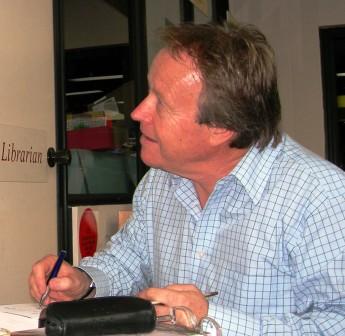
Patrick Lindsay author of FROMELLES which is a mix of detective story and World War 1 Australian history.  The release of Patrick’s book in November 2007 brought the missing of Fromelles and the search to find them into the public arena.

Patrick Lindsay

Photo – Patrick Lindsay – December 2007 

Carole Laignel for her work as Secretary of the F.W.T.M. 14-18 (Fromelles Museum) and generous supply of ‘on the spot’ coverage including photos of the archaeological dig.

Carole Laignel

Photo – Carole Laignel – June 2008  

The Mayor, Mr Hubert Huchette and the villagers of Fromelles including Francis Delattre and the members of the F.W.T.M 14-18 (Fromelles Museum) for welcoming the many visitors to their village and acknowledgement of the Diggers contribution to their liberty.

Fromelles Mayor Hubert Huchette

Photo – Mayor Mr Hubert Hutchett at Memorial Service – June 2008 

Madame Marie Paule Demassiet for her generous gift of the land in which the Missing of Fromelles lie.

Tim Whitford thanking Madame Paule  Demassiet

Photo – Tim Whitford thanking Madame Paule Demassiet – June 2008

To Lambis Englezos we say a heartfelt THANK YOU. You will no longer walk this field alone……

Photo – Lambis Englezos in the field at Pheasant Wood – April 2008

Call back tomorrow for News Updates

FROMELLES is NOT honoured on The Anzac Memorial in Hyde Park, Sydney. FFFAIF supports the recognition of FROMELLES on all state memorials.

Posted in Events, Projects, Top Posts | Comments Off on Our THANKS go to………

Fromelles Forensics

The archaeologists have now left the site of the dig at Pheasant Wood Fromelles and the earth has been returned to the burial pits. Their brief was to establish whether the remains of the Missing from the Battle of Fromelles had been buried there almost 92 years ago by the German army.

Pheasant Wood at end of the dig

The archaeologists are now preparing a report for the Australian, British and French governments based on their finds.  The members of Glasgow University Archaeological Division (GUARD) were not the only scientists on site.

Dr Denise Donlon, forensic anthropologist, from the University of Sydney pictured below with Carole Liagnel from the F.W.T.M 14-18 (Fromelles Museum) was also on site.

Dr Denise Donlon & Carole Laignel at Pheasant wood

Dr Donlon is the Curator of The J. L. Shellshear Museum of Physical Anthropology & Comparative Anatomy at the University of Sydney.  The university’s website states that one of the ‘Specific projects involve the identification of fragmented bone as human or non-human, sex determination of juvenile human skeletons and teeth…’

In April 2007 Dr Donlon formed part of the Army History Unit (AHU) team that accompanied Operation Aussies Home (OAH) to Vietnam in the successful search of missing Diggers from the Vietnam conflict. 

In the past twelve hours there have been no reports in the Australian media, to hand, but the article in yesterday’s Herald Sun by RSL National President Bill Crews entitled Let Digger’s Rest has prompted a wide range of comments. Including one from FFFAIF member and founder of Recovering Overseas Australian Missing Inc. (ROAM) Chris Bryett.

Chris states:There is a cheap standard test available to identify Diggers from Tommies called Strontium 90 it is a test of tooth enamel. DNA is reliable. We only have to look at the Zonnebeke 5 to see that all Diggers were DNA tested and 2 identified. Work continues to find the identity of the other 3. This is unique. We know the names of Diggers buried here. As descendant Tim Whitford said “They’ve been slung in there like yesterday’s garbage. They are not at peace.” Exhume them, test them and respectfully rebury them in that same field thanks to it’s donation by Mde de Massiet.

Other comments in response to Let Digger’s Rest can be read on the Herald Sun website where you also have the opportunity to add your own comments.Clicking here to read other comments and also add your own.

The Bundaberg NewsMail from Queensland Australia tells the story of the family of another missing digger from the Battle of Fromelles who hopes his final resting place has been found. Click here to read about the family of Private Alfred Thompson in Grave riddle to be solved.

Call back TOMORROW for MORE NEWS

FROMELLES is NOT honoured on The Anzac Memorial in Hyde Park, Sydney. FFFAIF supports the recognition of FROMELLES on all state memorials.

Posted in Top Posts | Comments Off on Fromelles Forensics

News from Fromelles

The atmosphere in the small French village of Fromelles has been irreversibly changed since the archaeological dig at Pheasant Wood has revealed the remains of the missing Australian Diggers and British soldiers from the Battle of Fromelles.

Secretary F.W.T.M. 14-18 

Fromelles has long acknowledged its connection with Australia and the Diggers who travelled far from home to help defend the French homeland. The F.W.T.M. 14-18 (The Fromelles Museum) showcases an impressive display of World War 1 articles. Carole Laignel, Secretary of the F.W.T.M. 14-18 was interviewed by the local French media and asked about the impact the archaeological dig would have on Fromelles.

You can read about Carole’s interview in the La Voix du Nord by clicking here[Need help with translating the article? Why not use GoogleLanguage Tools? Not sure how to do it?  Simply copy the http:// address of the page you want translated into the Translate a web page’ box at GoogleLanguage Tools. Click here to access GoogleLanguage Tools]

The archaeologist from Glasgow University Archaeological Division (GUARD) may have finished the ‘limited excavation’ at Pheasant Wood on Friday 13 June 2008 but the project is still a long way from completion. The Australian public along with the Australian, British and French Governments now await the archaeologist’s recommendations and report.

Australian newspapers carried the following stories:

The Herald Sun: Major General Bill Crews AO, national president of the RSL states that: the RSL’s view is that, having confirmed the presence of a mass grave containing Australians, the site should not be further disturbed and should now be designated a war grave. To read more click here.

The Maitland Mercury: Donated burial ground is ‘part of the Hunter’: A public thank you to the 80-year-old landowner who donated her ground at Fromelles to the diggers who died on that World War 1 battle site came yesterday from Maitland Mayor Peter Blackmore and Hunter military historian David Dial. To read more click here

Both the Herald Sun and Maitland Mercury articles are open for comments on their websites if you wish to record your views.

Call back tomorrow for MORE NEWS.

FROMELLES is NOT honoured on The Anzac Memorial in Hyde Park, Sydney. FFFAIF supports the recognition of FROMELLES on all state memorials.


Posted in Top Posts | Comments Off on News from Fromelles

….more on the Service

Residents and visitors of Fromelles attended the Memorial service to mark the completion of the archaeological dig at Pheasant Wood on Friday 13 June 2008.

Pheasant Wood Memorial Service_11

The photo above shows the arrival of Reverend John Porter- Commonwealth War Graves Commission who along with local priest Father Roger Duprez offered prayers for peace.

The worldwide media’s coverage of the event includes a video report from the BBC NewsWorld War1 ‘missing’ remembered – which is well worth a look. Click here.

Australian national TV also broadcast reports on the service:

ABC News: Field of Conflict. Click here to view.

National Nine News: Dig ends. Click here to view.

Other media coverage included:

Sydney Morning Herald: Diggers farewelled at last. Click here. Fate of Soldiers’ remains undecided. Click here.

ABC online News: Search for diggers in Fromelles completed. This page has been updated from yesterday to include an informative audio report in addition to yesterday’s video report. Click here.

In a media release fom the Australian Defence Department, The Minister for Defence Science and Personnel The Hon. Warren Snowden gives details of those who participated in the Memorial Service. Click here to read the release in full.

If you are interested in reading about the activities at Pheasant Wood directly from the newspapers available in Fromelles follow the links sent to FFFAIF by Carole Laignel, Secretary F.W.T.M. 14-18 (Fromelles Museum). To read the report on the Memorial Service at Fromelles in French, click here or to read a translation of the article click here.

To view other articles from La Voix du Nord  reporting on the archeological dig enter Fromelles in the search engine on the site’s opening page. Click here, to access La Voix du Nord opening page. Need help with translating the articles? Why not use GoogleLanguage Tools. Click here to use to access this web tool: ‘Translate a web page’.

CALL BACK TOMORROW FOR MORE NEWS.

FROMELLES is NOT honoured on the Anzac Memorial in Hyde Park Sydney. FFFAIF supports the recognition of FROMELLES on all state memorials.

Posted in Uncategorized | Comments Off on ….more on the Service

Service at Fromelles

An informal but moving ceremony at 11a.m. Friday 13 June 2008 heralded the close of activity at the archaeological dig at Pheasant Wood Fromelles.

Pheasant Wood Memorial Service_14

The photos sent by Carole Laignel, Secretary F.W.T.M 14-18 (Fromelles Museum) capture details of the service. Read Carole’s account of the proceedings:

Dear friends,

It was a sunny day, not very hot, around 15°C, but not as so rainy as yesterday when 26mm fell!!! So I took round 200 photos and others members of the association too ! Here are some of the photos ….

In the first photo you can see that they began yesterday evening to put all in order and to return the soil over the dig!

Pheasant Wood Memorial Service_1

In the second one: the girl is Tim Whitford’s daughter in front of the new memorial

Pheasant Wodd Memorial Service_2

IN MEMORY OF THE AUSTRALIAN AND
BRITISH SOLDIERS WHO LIE HERE AND WHO
GAVE THEIR LIVES AT FROMELLES IN
JULY 1916

LEST WE FORGET

and behind you can see Martial Delebarre at work !

The 3rd is the arrival of some dignitaries: porte-drapeaux (flag bearers) & Mr Claude Durand AM [Mayor] from Bullecourt … you see the mud at the front … that was very emotional! 

Pheasant Wood Memorial Service_3

At the back Fromelles’ church and Martial Delebarre pushing his wheel-barrow! 

Pheasant Wood Memorial Service_4

In the next one, you’ll see Claude Durand AM Mayor of Bullecourt & Tim Whitford !

Pheasant Wood Memorial Service_5

Tim’s family under the sun just by the memorial with the church at the back! 

Pheasant Wood Memorial Service_6

The pastor (Chaplain) is arriving & General O’Brien is looking for the others dignitaries! 

Pheasant Wood Memorial Service_7

This photo with Hubert Huchette, our mayor and the pastor & our priest from Weppes’s area, l’abbé (Father) Duprez who recited a prayer after the pastor!

Photo of the soil or mud from Fromelles now!

Pheasant Wood Memorial Service_9

 A very nice photo of 4 archaeologists, under a beautiful sky!

One part of the assembled people. I don’t know how many we were but that was great to see so many people interested: sitting is Mme Demassiet, the owner of the field! See the sky !!

Pheasant Wood Memorial Service_11

On the right is Sam Rossato, our friend our friend from the Australian Embassy in Paris

Pheasant Wood Memorial Service_12

I think it’s a very nice photo with the flowers just at the front! Général O’Brien is speaking and at the back our french flag bearers!

Pheasant Wood Memorial Service_13 

Our french priest is saying the prayer!

Pheasant Wood Memorial Service_14

The last one is when our mayor Hubert Huchette is speaking, he thanks all the persons who organised these researchers, especially Lambis Englezos, our friend from Melbourne and everybody who was part of the digging!

Pheasant Wood Memorial Service_15

You can see all the gerbs (tributes) put by all the dignitarities!  I put one with Hubert Huchette & Francis Delattre but of course I couldn’t take the photo !

Hope you’ll be happy with all these photos ?

Around 5.00pm, a journalist from our local newspaper : ” La Voix du Nord” will phone me to ask some questions about the tourism in Fromelles! May be there will be more & more tourists now after this discovery !!! 

Tonight we’ll see on French Local TV on FR3 at 7.00pm something about the ceremony , but it’ll be longer on Monday at noon & at 7.00pm !

I’ll stop now ! my computer seams to be tired !!  hope you will accept all the photos !*

Lest we forget 

There has been significant coverage in the media:

ABC News: Search for diggers in Fromelles completed  by ABC correspondent Stephanie Kennedy with VIDEO of service. To view click here.

Fromelles excavation ends . Click here.

news.com.au: Service held for Australian soldiers. Click here.

adelaide now: Fromelles Click here.

The Herald Sun: Diggers’ Fromelles graves offer by French. Click here.

Patrick Lindsay’s blog: Pheasant Wood land now belongs to our Missing Diggers. Click here.

The Sydney Morning Herald: Give diggers the dignity of reburial . Click here.

The Daily Telegraph: Should the Fromelles Diggers be left to rest in peace. Click here.

BBC News: WWI ‘mass grave’ to be sealed . Click here to read article and view video.

Call back tomorrow for more news.

FROMELLES is NOT honoured on The Anzac Memorial in Hyde Park, Sydney. FFFAIF supports the recognition of FROMELLES on all state memorials.

Posted in Commemorations, Top Posts | Comments Off on Service at Fromelles

Faces from Fromelles

The Australian Government issued an update on Day 16 of the archaeological dig at Pheasant Wood near Fromelles in northern France. The report states that “………Of significance, remains have now been discovered at the end of a sixth pit………………It is now confirmed that a small part of the pit was used to bury remains. Remains are not present in the remaining two pits.” Read the complete update by clicking here. Department of Defence photos of the dig can be viewed by clicking here.  More news links after the letter from Sgt Crewes.

The excavation will conclude on Friday 13 June. At 11am on Friday morning there will be a short memorial service for the soldiers who have lain buried at Pheasant Wood for nearly 92 years.

Private Tom Cartwright

The photo above, supplied by FFFAIF member Andrew Pittaway, shows Private Thomas Clift Cartwright from Fremantle, Western Australia who died at The Battle of Fromelles and is listed as one of the missing Diggers buried at Pheasant Wood.

Sgt Arthur Crewes 53rd Battalion

Sergeant Arthur Crewes, pictured above, fought and survived the Battle of Fromelles. In the following article written by Yves Fohlen in 2006 and published in DIGGER 16, the magazine of The Families and Friends of the First AIF, you can read a first hand account of the Battle of Fromelles.

A letter following Fromelles  by Yves Fohlen, France

The following letter was written after the battle of Fromelles by Private 4755 Arthur Norton Crewes, 53rd Battalion. This document was sent to Yves about 10 years ago by a relative of Crewes who knew of Yves’deep interest in the unit. In June 2006 Yves unearthed it from his 53rd Battalion archives and sent photocopies of it to Martial Delebarre, curator of the Fromelles museum. This year marks the 90th anniversary of Fromelles, and Crewes’ letter is published as a reminder of the sacrifices made by the men of the 5th Division AIF and the courage they showed on one evening and night in July 1916. 

Northenden

Red Cross Hospital, Cheshire, England

Tuesday, August 1st, 1916

My dear Father, Sisters and Brothers,

Long before this reaches you, you will for sure have heard of my being wounded. But as to how this come about you are no doubt still in the dark, as the cable you would receive from the Military Authorities and my cable which I sent while in Hospital in Manchester about 27th July would not tell you a great deal. In this letter I intend to describe fully what took place from the time I wrote home last (about July 14th) to the present day.

First I would like to assure you that I am in the best of health and am eating well, a good sign, I think, also that the wound is not serious. Well, to commence from the beginning. When I wrote last we were under shell fire in the reserve trenches about 1000 yards from the firing line. That day about 30 shells burst near us but did no damage. On the Sunday my platoon were put on fatigue work, carrying ammunition up though the communication trench to the firing line. We had not got far along the trench before we were spotted by the Germans and then things began to get warm. They poured in shell after shell which burst very close to us and made us beat a hasty retreat behind some dugouts, dropping cases of bombs as we ran. That little experience did shake our nerves, seeing that the shells burst unpleasantly close and that the majority of us were new hands under fire. Luckily no one was hit and as soon as the firing ceased off we stacked the ammunition in the trench ready to be carried to the firing line tonight. That same night we went into the firing-line – Sunday 16th July – and when I had a look round in day-light I could plainly see that it was not the safest of places, as in some places the Germans had blown down our parapets. Another thing that made it dangerous was the fact that the point of the firing line where we were stationed, was so advanced to other parts that it enabled the Germans to enfilade us with machine gun and shell fire. This part of the firing line is rightly termed the horse-shoe and to give you an idea of the position I have drawn a rough sketch on the back of page 2.

All day Monday we were shelled by the Germans, some bursting very close to me. Two men in my section – five yards from me, were hit by shrapnel, one in the back and the other in the leg. That was only after the bombardment had been going 5 minutes. During the day men were being constantly hit from A and B Companies of my battalion and also men of other battalions. That day I had a very lucky escape. I was detailed to carry dixies of tea from the Cook’s dugout to my platoon lines. While away 2 large German shells burst just above where I had been crouching and a great piece of shrapnel buried itself in the trench. One of the boys when I returned told me that I would certainly have been hit had I been there. Lucky am I not? Or is it that I have had a guardian angel watching over me during my short stay in the trenches and through that great charge which the Australians made on the Wednesday 18th July [sic].

Tuesday things were more quiet although at night machine gun fire was pretty brisk, and while on sentry post we took a risk each time we looked over the top of the trench, which we had to do as the loophole is not sufficient at night. To describe that charge, how I became wounded, my experiences and lucky escapes while lying wounded for 1 day and 2 nights on No-man’s land, of my removal from one hospital to another in France and thence on to England would need page after page, so you see I will have to be brief.

Before going into action Sunday night we knew that we had to make a charge so that we had plenty of time to think things over. All day Wednesday our Artillery kept up a heavy bombardment on the German trenches and the Germans reply to it was none too pleasant. Before going over the parapet we had two drinks of rum to brace our nerves. While waiting for the charge a piece of shrapnel from a high explosive shell whizzed past my face and buried itself in a sandbag. Lucky miss wasn’t it?

At 5.43 pm the Signal for the charge sounded and over the top we went into the face of death, shells bursting, machine guns rattling and rifles crackling. Each man, besides his equipment and rifle, carried either a spade, pick, rolls of matting or scaling ladder. I, with one of my section, had to carry a large wooden scaling ladder, about 8 feet in length and fairly heavy. We could only carry it about 10 yards and then rest. Added to our difficulties was the barbed wire and ditches we had to rush over. About 50 yards from the German trenches I was hit, I felt a numbing sensation and my rifle went spinning. The left hand is what stopped a few bullets from a machine gun, one through the thumb and one through the wrist, both coming out I think underneath the thumb, the fleshy part. Besides these holes there are some gashes, three on thumb and one across the hand. All is going on splendidly with the hand now, no bones smashed at all. Hope to have full use of hand again in a month or two.

When I was hit, I yelled out to my chum at the other end of the ladder. Before he got to me I went down on my knees and then he tied his handkerchief tightly round my wrist to stop the bleeding. He then rushed on alone dragging, the heavy ladder after him. I crawled into a large shell hole close by and lay there. I managed to pull my field dressing out of my tunic pocket and then began a struggle to get the bandages out from the covering with right hand and teeth. After 10 minutes painful struggle at last I got the bandages out and then wrapped them round my wounds. All this time bullets were whizzing by and shells bursting, great pieces of shrapnel coming close to me. From my shelter I could see our lads rushing on in the face of death. It was a fine though terrible sight. All Wednesday night, all day Thursday and through the same night I lay between the two lines of trenches, too much afraid to move on account of snipers and machine guns which kept playing over the ground. At last, knowing I was getting weak and as my water bottle was now empty, I decided to try and get back to our lines on Thursday night.

When it was quite dark, about 11 pm, I started and ran for my life, not knowing whether I was making for our own trench or the Germans. Each minute I had to lie low for fire shells would light up the ground, showing up objects very clearly. I had gone about 100 yards when I came upon two men sleeping and in a trench and I, thinking they were German snipers, was too afraid to move after I spotted them and there I lay till just at dawn when I discovered they were two wounded Australians lads unable to move and they’re not 100 yards away from our trench. I spoke to one of these lads and told him I would mention the fact of them being there. Just as dawn was breaking I made a dash for the trench and I hopped it lively too, through barbed wire and all.

What a sigh of relief I breathed when I dropped from the top of the parapet into our own trench. As I sit in safety and security in an easy chair outside the hospital in a typical English country road, I cannot help thinking of those awful nights and day I spent on No-man’s land. For companions I had 2 yards from me a dead comrade and 5 yards behind me a Sergeant with a smashed hip unable to move. All through the nights and day the cries of the wounded for water and food were awful to listen to and each time they were heard the zip-zip and ping of bullets would come in the direction of the cries – an example of German brutality.”

Digger profile: Sergeant 4755 Arthur Crewes, 53rd Battalion

Athur Crewes enlisted on 8th September 1915. He had previous military service in the Militia from 1913-1915 and was a warehouseman from Dulwich Hill when he enlisted. Attched to the 15th Reinforcments for the 1st Battalion, he left Australia on 8th March 1916 aboard HMAT A15 Star of England. He was transferred to the 53rd Infantry Battalion on 20th April 1916. Following his wounding at Fromelles and treatment in the UK, Arthur rejoined the 53rd Battalion in France on 18th December 1916. Arthur became a sergeant on 26th December 1917 and was wounded a second time at Peronne on 1st September 1918, with a shrapnel wound to the right thigh. He was in England at the time of the Armistice and returned to Australia aboard the Ascanius. Whilst at sea, he was found not guilty for leaving his sentry post without permission. Discharged in 1919, he passed away in 1966, fifty years after the Fromelles’ bloodbath.

This article appeared in DIGGER Issue 16. Each edition of DIGGER contains many articles and photos, the majority of which are published for the first time and are provided by members. Details of the contents of past DIGGER magazines can be viewed by clicking on the DIGGER tab at the top of this page.

If you found this article of interest and would like to read more on the soldiers of the First AIF in other DIGGER magazines, why not fill out a Membership Application Form today? Membership is $A40 p.a. For more details visit our Members Area (click on tab at the top of the page).

Copyright © DIGGER Magazine. All material in DIGGER is copyright. Subject to the fair dealing provisions of the Copyright Act 1968, reproduction in any form is not permitted without written permission of the Editor or Author/s.

All website information (i.e. the images, graphics, text etc) on our website are copyright © Families and Friends of the First AIF Incorporated (FFFAIF Inc.) or its individual Members.The Minister for Defence Science and Personnel, The Hon. Warren Snowdon MP, in a press release today confirmed that “British soldiers buried beside Diggers in Fromelles. Read the complete press release here.

NEWS UPDATES:

The Minister for Defence Science and Personnel, The Hon. Warren Snowdon MP, in a press release today confirmed that “British soldiers buried beside Diggers in Fromelles”. Read the complete press release here.

Media interest has hightened as the Fromelles dig draws to a close.

The Maitland Mercury: Fromelles discovery offers new hope of finding Hunter men. Click here.

The West Australian: British artefacts seen at Fromelles site. Click here.

Yahoo!7 News: Buttons prove British soldiers buried with Diggers. Click here. 

The Telegraph (UK): British war grave found in northern France. Click here.

ABC News: Buttons prove British soldiers buried with Diggers: Defence. Click here.

The Australian: Howard visits Diggers’ mass grave. Click here.

The Herald Sun: Laser will tell Fromelles war graves tale for Diggers. Click here.

7th Space interactive: British artefacts found at Fromelles war grave site. Click here.

Author of FROMELLES Patrick Lindsay also reports from Pheasant Wood. Click here to read Patrick’s comments.

Check back TOMORROW for News updates and to see more of the Diggers who fought at Fromelles.

FROMELLES is NOT honoured on The Anzac Memorial in Hyde Park, Sydney. FFFAIF supports the recognition of FROMELLES on all state memorials.

Posted in Diggers of First AIF, Top Posts | Comments Off on Faces from Fromelles

Final Days

Sunshine at Fromelles:

Sunshine returns to Pheasant Wood Fromelles

As the dig at Fromelles enters its final days the Australian newspaper reports this morning that the site is ‘closed to the public’. Click here.

Before the reported closure Lambis Englezos had the opportunity to visit with a very familiar face – to the Australian public. Patrick Lindsay’s blog has a photo of the visit. To take a look click here and scroll down to Thursday 12 June entry.

Some interesting details on what is happening on the site are reported by The West Australian & The Melbourne Age: Laser searches for soldiers at Fromelles. Click here.

The following article appeared in Fremantle Gazette (Western Australia). The City of Fremantle archivist Andrew Pittaway is a member of The Families and Friends of the First AIF.

Freemantle Gazette

 LOOK FOR MORE NEWS TOMORROW.

FROMELLES is NOT honoured on The Anzac Memorial in Hyde Park, Sydney. FFFAIF supports the recognition of FROMELLES on all state memorials.


Posted in Top Posts | Comments Off on Final Days